12Jul
Cat stress is one of the most common reasons for changes in a pet's behaviour. Many owners notice that their once calm and affectionate cat suddenly becomes fearful, aggressive, stops eating, or spends most of the day hiding.
These changes are often mistaken for personality traits, while in reality they may be signs of emotional stress.Modern scientific research shows that chronic stress affects not only a cat's emotional well-being but also its overall physical health.
Looking after your cat's emotional balance is just as important as providing proper nutrition, fresh water, and regular veterinary care.
Why Do Cats Experience Stress?
Cats are highly territorial animals. Their home environment, familiar scents, and daily routine provide a sense of safety and security. Any significant change can be perceived as a potential threat.
Studies published by the International Society of Feline Medicine (ISFM) and the American Association of Feline Practitioners (AAFP) have shown that long-term stress is associated with an increased risk of lower urinary tract disease, digestive problems, weakened immunity, excessive grooming, and behavioural disorders.
Experts conclude that reducing stress is an important part of maintaining a cat's long-term health and well-being.
Common Causes of Stress in Cats
Almost every domestic cat experiences stressful situations throughout its life.The most common causes include:
- Moving to a new home
- Changes in ownership
- Travelling by car
- Veterinary visits
- Vaccinations
- Medical examinations
- Surgical procedures
- Introduction of a new pet
- A new baby in the family
- Home renovations
- Rearranging furniture
- Loud music
- Thunderstorms
- Fireworks
- Encounters with aggressive dogs
- Conflicts with other cats
- Long periods alone
- Separation from their owner
- Lack of playtime and mental stimulation
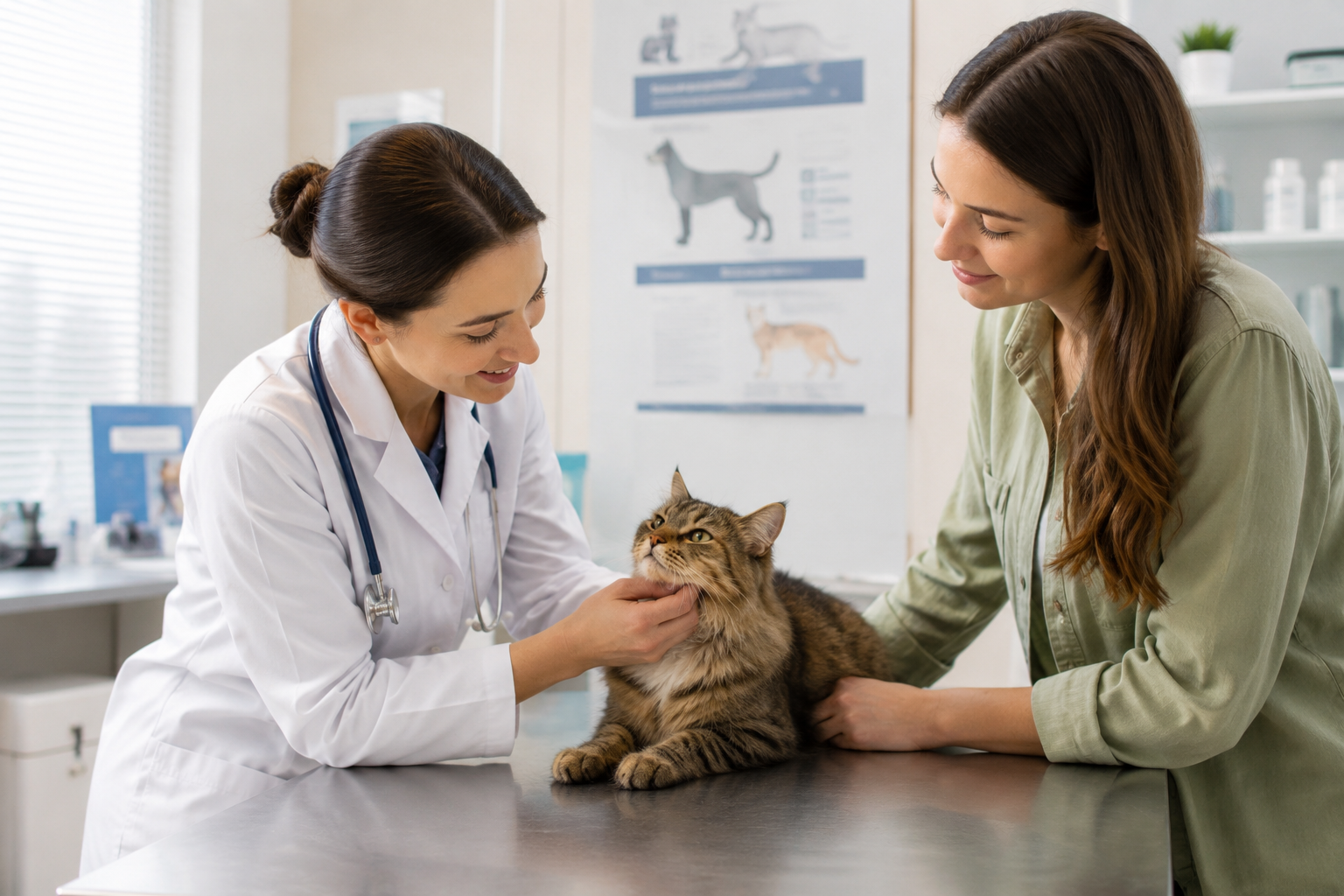
Even a routine veterinary appointment combines several stressful experiences, including transportation, unfamiliar smells, strange animals, loud noises, and physical examination.
How to Recognise Stress in Cats
Cats are naturally skilled at hiding discomfort and anxiety. As a result, owners often notice problems only after stress has already affected their behaviour.Common signs of stress include:
- Loss of appetite
- Refusing favourite treats
- Hiding more often
- Aggressive behaviour
- Anxiety or nervousness
- Changes in sleeping habits
- Excessive grooming
- Hair loss
- Avoiding the litter tray
- Increased vocalisation
- Reduced activity
- Less interest in playing
If these symptoms continue for an extended period, your cat may be experiencing ongoing emotional stress that can negatively affect its quality of life.
What Does Scientific Research Say?
Over the past decade, numerous scientific studies have examined the effects of chronic stress in domestic cats.Researchers have found that:
- Chronic stress can weaken the immune system.
- Stress increases the risk of feline idiopathic cystitis.
- Long-term anxiety contributes to behavioural problems.
- A predictable, calm environment significantly improves feline welfare.
- Preventing stress is more effective than dealing with its long-term consequences.
For these reasons, feline health experts now consider emotional well-being an essential part of responsible pet care.
How Can You Help a Stressed Cat?
Although it is impossible to eliminate every stressful event from your cat's life, owners can do a great deal to help their pets cope with change.Simple steps include:
- Maintaining a consistent daily routine
- Avoiding sudden dietary changes
- Providing safe hiding places
- Playing with your cat every day
- Minimising unnecessary environmental changes
- Preparing your cat before travelling or moving
A natural calming supplement may also provide valuable daily support during stressful periods.
Sondetta ECO – Natural Emotional Support for Cats
Sondetta ECO is a premium natural calming supplement developed to support emotional balance and overall well-being in cats.The powder is easy to mix with your cat's daily food and can be used during periods of increased stress, including:
- Before veterinary visits
- During travel
- When moving house
- After introducing a new pet
- Following changes in the home environment
- During thunderstorms or fireworks
- In any other stressful situations
Made with carefully selected natural ingredients, Sondetta ECO helps support calm behaviour and emotional balance while making it easier for cats to adapt to everyday challenges.
Conclusion
Stress is a natural response to changes in a cat's environment.
However, when stress becomes frequent or long-lasting, it may affect both physical health and emotional well-being.
By providing a calm home environment, plenty of attention, daily interaction, and natural nutritional support such as Sondetta ECO, cat owners can help their pets feel more relaxed, confident, and comfortable throughout every stage of life.
SEO Keywords
cat stress, stress in cats, signs of stress in cats, stressed cat symptoms, how to calm a stressed cat, natural calming supplement for cats, calming supplement for cats, anxious cat, nervous cat, emotional support for cats, cat anxiety, cat behaviour problems, stressed indoor cat, natural pet supplement, Sondetta ECO.

Comments
